
When Is Back Pain an Emergency?
Oct 19, 2026
By the GSMC pain management team
Most back pain is not an emergency. Strains, flare-ups of arthritis and even sciatica usually improve with time, movement and the right care. But a few warning signs mean you should get emergency help right away. This checklist explains the difference between "go to the ER now," "call your doctor today" and "book an appointment."
GSMC is led by Dr. Dharam Mann, who completed fellowships in pain management, cardiac anesthesia and critical care at Massachusetts General Hospital/Harvard.
This is Day 9 of our spine and sciatica series. Day 8 covered facet joint pain and medial branch blocks.
Go to the ER now if you have back pain with:
- Loss of bladder or bowel control, or new trouble starting to urinate.
- Numbness in the groin, buttocks or inner thighs (the "saddle" area).
- New or worsening weakness in one or both legs, or a foot that drags.
- Fever or chills, especially after a recent procedure, infection or IV drug use.
- A major fall, car accident or other injury.
- Chest pain, trouble breathing or sudden tearing pain in the back or belly. Call 911.
The first three signs can mean cauda equina syndrome, pressure on the nerves at the bottom of the spine. It needs emergency evaluation, often within hours, to protect nerve function.
Call your doctor today if you have:
- Sudden, sharp back pain after a minor fall, lift or cough, especially if you have osteoporosis or take steroids. This can be a vertebral compression fracture.
- Back pain with unexplained weight loss or a history of cancer.
- Pain that is severe at night and does not change with position.
- New numbness or tingling that is spreading.
Book an appointment if:
- Back pain has lasted more than 4 to 6 weeks, or keeps coming back.
- Leg pain from sciatica is not settling.
- Pain limits work, sleep, driving or time with family.
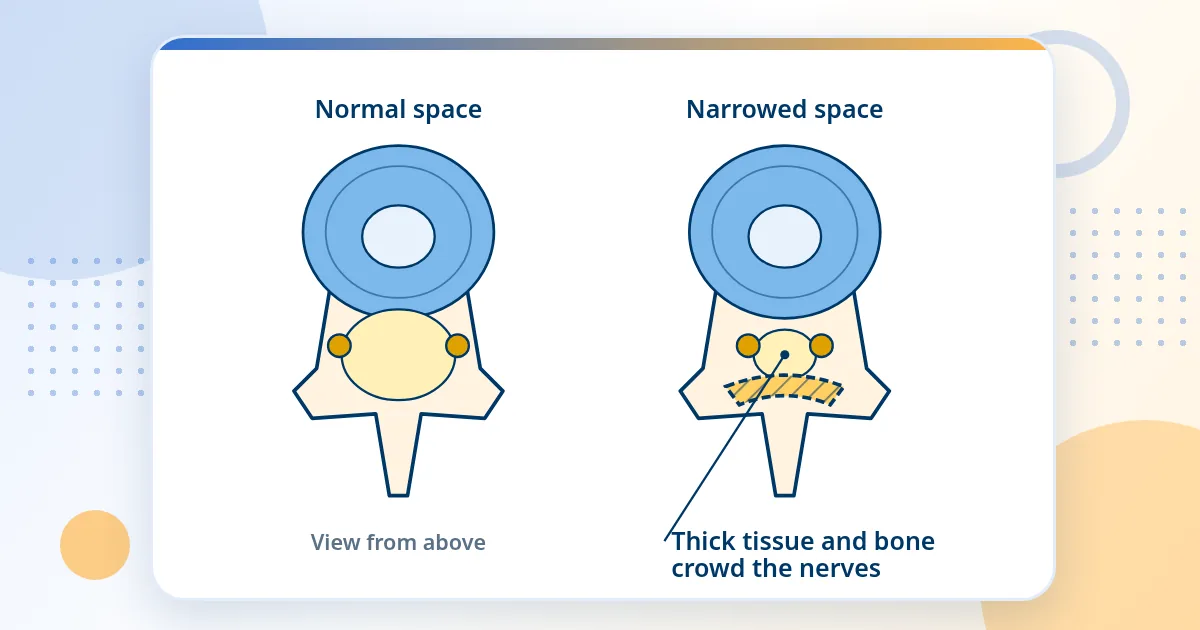
- Pain is worse when walking and better when sitting, which can point to spinal stenosis.
Our back pain doctor guide explains how our team looks for the real source of the pain.
What you can do at home in the meantime
- Stay gently active. Short walks are usually better than bed rest.
- Try heat or ice for 15 to 20 minutes at a time.
- Use over-the-counter pain relievers only as directed and if they are safe for you.
- Watch for any of the red-flag signs above, and act on them right away.
How our team evaluates back pain
At your visit, we review your history, examine your strength, reflexes and sensation, and order imaging only when it will change the plan. Treatment often starts with physical therapy and activity changes. When those are not enough, options include epidural steroid injections, facet joint injections and medial branch blocks, radiofrequency ablation and kyphoplasty for painful compression fractures. Learn more on our back pain page.
Back pain care at GSMC
Our team sees patients with back pain at all 7 GSMC offices in Ocean and Monmouth County: Whiting, Toms River, Brick, Barnegat, Manahawkin, Freehold and West Long Branch. Patients from Allentown are often closest to our Freehold office, and our Manahawkin office serves Long Beach Island and southern Ocean County. Dr. Mann performs the spine procedures described here.
Request a consultation to talk with our team.
Frequently Asked Questions
When should I go to the ER for back pain?
Go now if back pain comes with loss of bladder or bowel control, numbness in the groin or inner thighs, new or worsening leg weakness, fever, or follows a major fall or accident. Call 911 for back pain with chest pain or trouble breathing.
What is cauda equina syndrome?
It is pressure on the bundle of nerves at the bottom of the spinal canal. Warning signs include trouble urinating or holding urine or stool, numbness in the saddle area and weakness in both legs. It needs emergency care, often within hours.
Is back pain with sciatica an emergency?
Usually not. Leg pain from a pinched nerve is common and often improves with time and care. It becomes urgent when it comes with new weakness, numbness in the groin, or bladder or bowel changes.
Can a minor fall cause a spine fracture?
Yes, especially in people with osteoporosis or who take steroids long term. Sudden, sharp mid or low back pain after a minor fall or even a cough should be checked.
When should I book an appointment instead?
Back pain that lasts more than a few weeks, keeps coming back, wakes you at night or limits work and sleep, without red-flag signs, is a good reason to see a pain specialist.
Medical disclaimer: This article is for general education only and is not medical advice. Please talk with your own doctor about your symptoms and treatment. Individual results vary.