
Patient brochure (PDF) All procedures & brochures
Overview
The genicular nerves are small nerves that carry pain signals from the knee. Genicular nerve radiofrequency ablation, or RFA, uses gentle heat from radio waves to calm these nerves so they send fewer pain signals. It may help some people with chronic knee pain from osteoarthritis, or ongoing pain after knee surgery, including knee replacement. First, a test called a genicular nerve block checks whether these nerves are carrying your pain. RFA does not repair the knee, and results vary.
GSMC is led by Dr. Dharam Mann, who completed fellowships in pain management, cardiac anesthesia and critical care at Massachusetts General Hospital/Harvard.
Watch: how radiofrequency ablation works
Video: “Boston Scientific: How Radiofrequency Ablation (RFA) Works” from Chronic Pain Relief by Boston Scientific on YouTube. It loads from youtube-nocookie.com only when you press play. Shown for general education; GSMC did not produce it. Watch on YouTube
What it is
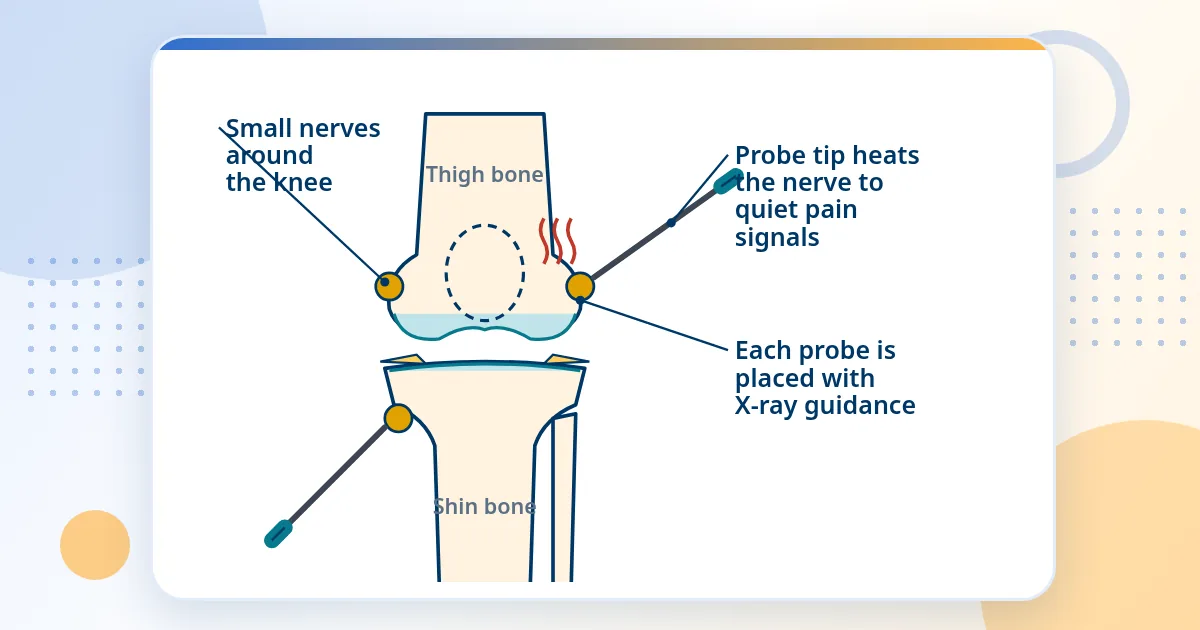
RFA, also called radiofrequency neurotomy, places thin needles next to the genicular nerves around the knee. A small electrode heats the nerve tissue to interrupt pain signals. Some systems use "cooled" radiofrequency, which can treat a slightly larger area.
RFA targets only the small sensory nerves. It does not affect the muscles that move your knee. Nerves can grow back over time, so pain may return, and the procedure can often be repeated if it helped.
Who it's for
Genicular nerve RFA may help people who have:
- Chronic knee pain from osteoarthritis that has not improved enough with therapy, medicines or injections
- Ongoing knee pain after knee replacement or other knee surgery
- People who are not ready for, or are not good candidates for, knee replacement
- Clear short-term relief from a test genicular nerve block
What the procedure involves, step by step
Step 1: The test block. 1. The skin is numbed. Using X-ray or ultrasound guidance, your physician places a thin needle near each of the genicular nerves (usually three or more) and injects a small amount of numbing medicine. 2. Over the next several hours, you do activities that usually hurt and track your pain in a diary. 3. If your pain clearly improves while the numbing medicine works, RFA may help.
Step 2: Radiofrequency ablation. 1. On a separate day, you lie on a table and the skin is numbed. Light sedation may be offered. 2. Using X-ray guidance, thin RF needles are placed next to each target nerve. 3. Before heating, a test may be done to make sure the needles are in a safe spot. 4. The nerves are treated with gentle heat. This usually takes about 30 to 60 minutes in total. 5. You rest briefly and go home the same day with a driver.
Recovery and what to expect
- Soreness, bruising or a burning feeling around the knee can last one to two weeks.
- Some people have a patch of numb skin near the knee for a while.
- Relief, if it happens, often builds over a few weeks. It may last months, and sometimes longer.
- Staying active and keeping up with exercise may help you get the most from treatment.
Candidacy: who may or may not be a good fit
May be a good fit: people with chronic knee pain from osteoarthritis or after knee surgery who had clear relief from a test genicular nerve block.
May not be a good fit: people with an infection in or near the knee, a loose or failing knee implant, a bleeding problem or blood thinners that cannot be safely paused, certain implanted electrical devices (which may need special planning), or pregnancy. Pain after knee replacement should be checked for infection or implant problems first. People who did not get relief from the test block are less likely to benefit.
Risks in brief
Risks include soreness, bruising, bleeding, infection, temporary numbness or burning of the skin around the knee, and, rarely, nerve injury or skin burn. Pain may not improve, and it can come back as the nerves regrow. We will review your specific risks.
Alternatives
Other options may include physical therapy, weight management, bracing, medicines, steroid or hyaluronic acid (gel) injections, PRP (usually self-pay), peripheral nerve stimulation or a referral to discuss knee replacement.
Frequently asked questions
Why do I need a test block first?
The test block numbs the genicular nerves for a few hours. If your pain clearly improves, RFA is more likely to help.
How long does genicular RFA last?
It varies. For some people relief lasts months, and sometimes longer. Nerves can grow back, so the procedure may be repeated if it helped.
Will it weaken my knee?
RFA targets small sensory nerves, not the nerves that control the knee muscles.
Can I have genicular RFA after a knee replacement?
For some people, yes. We first make sure the pain is not from an infection or a problem with the implant.
Will it hurt?
The skin is numbed, and light sedation may be offered. Soreness for a week or two afterward is common.
Does it fix arthritis?
No. RFA may reduce pain signals, but it does not repair cartilage or stop arthritis.
Insurance
GSMC participates with all Aetna plans, including Aetna HMO, and with many other insurance plans. Coverage for a specific procedure depends on your plan and may need prior authorization; call 732-202-3000 to verify. Our team can help check your benefits before treatment.
Where to get genicular nerve radiofrequency ablation near you
GSMC has 7 offices in Ocean and Monmouth County, with one phone number for all of them. Call 732-202-3000 to confirm which office offers genicular nerve radiofrequency ablation.
- Toms River1314 Hooper Ave, 1st Floor, Toms River, NJ 08753Get directions · 732-202-3000
- Brick1608 NJ-88, Suite 102, Brick Township, NJ 08724Get directions · 732-202-3000
- Whiting1100 NJ-70, Entrance B, Whiting, NJ 08759Get directions · 732-202-3000
- Barnegat249 S Main St, Suite 5, Barnegat Township, NJ 08005Get directions · 732-202-3000
- Manahawkin1109 Beacon Ave, Manahawkin, NJ 08050Get directions · 732-202-3000
- Freehold322 Professional View Dr, 300 Building, 2nd Floor, Freehold, NJ 07728Get directions · 732-202-3000
- West Long Branch100 NJ-36, Suite 1K, West Long Branch, NJ 07764Get directions · 732-202-3000
Patients come to us from Toms River, Brick, Lakewood, Jackson, Manchester, Whiting, Lacey, Barnegat, Manahawkin, Long Beach Island, Little Egg Harbor, Tuckerton, Freehold, Howell, Marlboro, Manalapan, Wall, West Long Branch, Long Branch, Eatontown, Red Bank, Neptune, Point Pleasant and other towns across Ocean and Monmouth County.
Nearby hospitals and imaging centers
Our offices are a short drive from these area hospitals and imaging centers:
- Community Medical Center (Toms River), near our Toms River office
- Ocean University Medical Center (Brick), near our Brick office
- Monmouth Medical Center Southern Campus (Lakewood), near our Brick office
- Southern Ocean Medical Center (Manahawkin), near our Manahawkin office
- CentraState Medical Center (Freehold), near our Freehold office
- Monmouth Medical Center (Long Branch), near our West Long Branch office
- Jersey Shore University Medical Center (Neptune), near our West Long Branch office
- Riverview Medical Center (Red Bank), near our West Long Branch office
- University Radiology (Toms River), near our Toms River office
- New Jersey Imaging Network - Toms River East (Toms River), near our Toms River office
- Atlantic Medical Imaging (Brick, Toms River, Manahawkin and Wall)
Listed for directions only.
Book an appointment
One phone number for all 7 GSMC offices in Ocean and Monmouth County.
Our offices
- Whiting
- Toms River (1314 Hooper Ave)
- Brick
- Barnegat
- Manahawkin
- Freehold (322 Professional View Dr)
- West Long Branch
Telehealth visits are available for second opinions and imaging reviews only, by phone. Please call 732-202-3000 to book one.
This page is general patient education and does not replace advice from your own clinician. Individual results vary, and no outcome can be promised.