
Patient brochure (PDF) All procedures & brochures
Overview
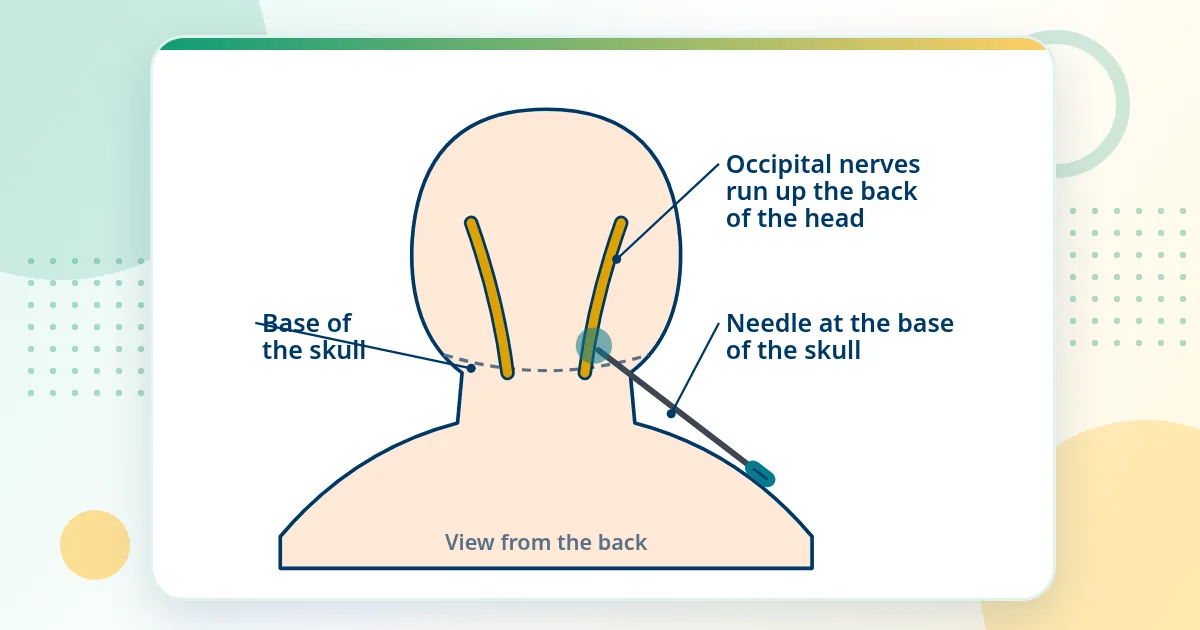
The occipital nerves run from the top of the neck up into the scalp at the back of the head. When they are irritated, they can cause sharp, shooting or burning pain at the back of the head, called occipital neuralgia. Headaches can also start from the neck, called cervicogenic headache. An occipital nerve block places numbing medicine, and sometimes a steroid, near these nerves. It may ease pain and help confirm where the pain comes from. For some people whose relief from the block is short-lived, occipital nerve radiofrequency ablation (RFA) may be an option.
GSMC is led by Dr. Dharam Mann, who completed fellowships in pain management, cardiac anesthesia and critical care at Massachusetts General Hospital/Harvard.
Watch: greater occipital nerve block for headaches
Video: “Headache treatment | Greater occipital nerve (GON) block injections” from University College London Hospitals NHS Foundation Trust on YouTube. It loads from youtube-nocookie.com only when you press play. Shown for general education; GSMC did not produce it. Watch on YouTube
What it is
- Occipital nerve block: an injection of numbing medicine, often with a steroid, near the greater and/or lesser occipital nerves at the back of the head. It is usually done in the office, often with ultrasound guidance.
- Occipital nerve RFA: uses radio waves to treat the nerve so it sends fewer pain signals. This may be done with heat (conventional RFA) or with short bursts of energy that do not destroy the nerve (pulsed RFA). For cervicogenic headache, RFA may instead target small nerves to the upper neck joints, such as the third occipital nerve, after a matching test block.
Research on occipital RFA is still limited, and it is usually considered only after blocks help but do not last.
Symptoms and who it's for
Common symptoms include:
- Sharp, shooting, electric or burning pain starting at the base of the skull
- Pain that spreads over the back or side of the head, sometimes behind the eye
- Scalp tenderness, sometimes with pain when brushing hair or lying on a pillow
- Headache that starts in the neck and gets worse with certain neck movements or positions
A block may help people with occipital neuralgia or cervicogenic headache that has not improved enough with medicines, therapy or posture changes. RFA may be considered for some people who get clear but short-lived relief from blocks.
What the procedure involves, step by step
Step 1: The occipital nerve block. 1. We review your headache history, exam and any imaging, and make sure other causes have been checked. 2. You sit or lie face down. The skin at the back of the head is cleaned. 3. Using ultrasound guidance or landmarks, your physician places a thin needle near the nerve and injects the medicine. This takes a few minutes. 4. You track your pain over the next hours and weeks.
Step 2: RFA, for some people. 1. If blocks give clear relief that does not last, RFA may be discussed. 2. The skin is numbed, and light sedation may be offered. 3. Using ultrasound or X-ray guidance, a thin RF needle is placed near the target nerve. A test confirms the position. 4. The nerve is treated with radiofrequency energy. You go home the same day with a driver.
Recovery and what to expect
- After a block, numbness of the scalp is common for a few hours. Most people return to normal activities the same or next day.
- A steroid, if used, may take a few days to work.
- After RFA, soreness or a sunburn-like feeling on the scalp can last a few weeks. Relief, if it happens, may build over a few weeks.
- Keep a headache diary so we can judge the response.
Candidacy: who may or may not be a good fit
May be a good fit: people with occipital neuralgia or cervicogenic headache whose exam points to these nerves or neck joints and who have not improved enough with other care.
May not be a good fit: people with a skin infection at the back of the head, a bleeding problem, an allergy to the medicines, or a skull defect from prior surgery in the area. A new or changing headache pattern needs a full evaluation first.
Get urgent care (call 911 or go to the emergency room) for a sudden, severe "worst-ever" headache, headache with fever and stiff neck, weakness, confusion, trouble speaking or vision loss, or a headache after a head injury.
Risks in brief
Block: soreness, bruising, brief dizziness, infection (uncommon) and, if a steroid is used, small patches of skin thinning or hair loss at the site (uncommon).
RFA: soreness, scalp numbness, a burning or sunburn-like feeling, and, rarely, nerve pain that is worse for a time (neuritis) or a painful nerve growth (neuroma). Pain may not improve, or may come back. We will review your specific risks.
Alternatives
Other options may include headache medicines, physical therapy and posture work, trigger point injections, Botox for some types of chronic headache, peripheral nerve stimulation or a referral to a neurologist.
Frequently asked questions
What is occipital neuralgia?
It is sharp, shooting or burning pain from irritated occipital nerves, usually starting at the base of the skull and spreading over the scalp.
What is cervicogenic headache?
It is a headache that starts from a problem in the neck, such as the upper neck joints, and is felt in the head.
How long does an occipital nerve block last?
The numbing medicine lasts hours. Any longer relief varies from days to months, and some people have little benefit.
When is RFA considered?
RFA may be considered for some people who get clear relief from blocks, but only for a short time.
Will my hair need to be shaved?
Usually not. The area is cleaned and the hair is parted.
Is RFA permanent?
No. Nerves can recover over time, so pain may return. The procedure may sometimes be repeated if it helped.
Insurance
GSMC participates with all Aetna plans, including Aetna HMO, and with many other insurance plans. Coverage for a specific procedure depends on your plan and may need prior authorization; call 732-202-3000 to verify. Our team can help check your benefits before treatment.
Where to get occipital nerve blocks and RFA near you
GSMC has 7 offices in Ocean and Monmouth County, with one phone number for all of them. Call 732-202-3000 to confirm which office offers occipital nerve blocks and RFA.
- Toms River1314 Hooper Ave, 1st Floor, Toms River, NJ 08753Get directions · 732-202-3000
- Brick1608 NJ-88, Suite 102, Brick Township, NJ 08724Get directions · 732-202-3000
- Whiting1100 NJ-70, Entrance B, Whiting, NJ 08759Get directions · 732-202-3000
- Barnegat249 S Main St, Suite 5, Barnegat Township, NJ 08005Get directions · 732-202-3000
- Manahawkin1109 Beacon Ave, Manahawkin, NJ 08050Get directions · 732-202-3000
- Freehold322 Professional View Dr, 300 Building, 2nd Floor, Freehold, NJ 07728Get directions · 732-202-3000
- West Long Branch100 NJ-36, Suite 1K, West Long Branch, NJ 07764Get directions · 732-202-3000
Patients come to us from Toms River, Brick, Lakewood, Jackson, Manchester, Whiting, Lacey, Barnegat, Manahawkin, Long Beach Island, Little Egg Harbor, Tuckerton, Freehold, Howell, Marlboro, Manalapan, Wall, West Long Branch, Long Branch, Eatontown, Red Bank, Neptune, Point Pleasant and other towns across Ocean and Monmouth County.
Nearby hospitals and imaging centers
Our offices are a short drive from these area hospitals and imaging centers:
- Community Medical Center (Toms River), near our Toms River office
- Ocean University Medical Center (Brick), near our Brick office
- Monmouth Medical Center Southern Campus (Lakewood), near our Brick office
- Southern Ocean Medical Center (Manahawkin), near our Manahawkin office
- CentraState Medical Center (Freehold), near our Freehold office
- Monmouth Medical Center (Long Branch), near our West Long Branch office
- Jersey Shore University Medical Center (Neptune), near our West Long Branch office
- Riverview Medical Center (Red Bank), near our West Long Branch office
- University Radiology (Toms River), near our Toms River office
- New Jersey Imaging Network - Toms River East (Toms River), near our Toms River office
- Atlantic Medical Imaging (Brick, Toms River, Manahawkin and Wall)
Listed for directions only.
Book an appointment
One phone number for all 7 GSMC offices in Ocean and Monmouth County.
Our offices
- Whiting
- Toms River (1314 Hooper Ave)
- Brick
- Barnegat
- Manahawkin
- Freehold (322 Professional View Dr)
- West Long Branch
Telehealth visits are available for second opinions and imaging reviews only, by phone. Please call 732-202-3000 to book one.
This page is general patient education and does not replace advice from your own clinician. Individual results vary, and no outcome can be promised.