
Overview
Peripheral nerve stimulation (PNS) is a minimally invasive treatment for some types of chronic pain. A very thin wire (lead) is placed through a needle next to a nerve in the arm, leg, shoulder, back or another area. The lead sends mild electrical pulses that may help change how pain signals travel to the brain.
GSMC is led by Dr. Dharam Mann, who completed fellowships in pain management, cardiac anesthesia and critical care at Massachusetts General Hospital/Harvard.
Unlike spinal cord stimulation, PNS targets a single nerve or area outside the spine. Some systems are used for a set period, often about 60 days, and then removed. Others are left in place long term after a successful trial.
Body areas treated with PNS
GSMC providers perform peripheral nerve stimulation, including with the Nalu™ system. Evaluation and follow-up are available at any of our 7 offices. Every plan starts with a trial, and results vary.
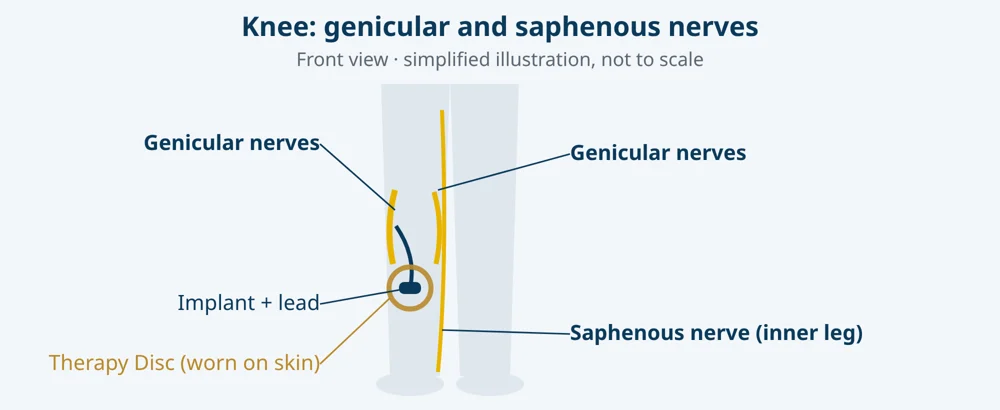
PNS for Knee Pain
A trial-first option that may ease long-lasting knee pain when therapy, medicines and injections have not helped enough.
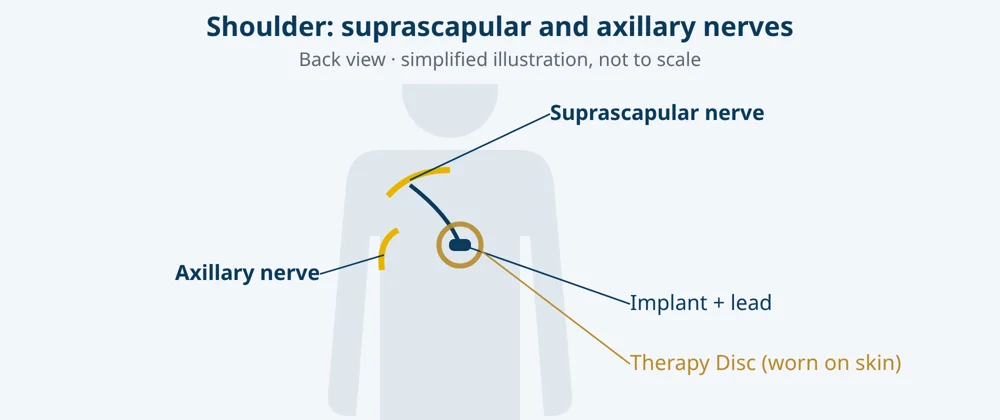
PNS for Shoulder Pain
A trial-first option that may ease long-lasting shoulder pain when therapy and injections have not helped enough.
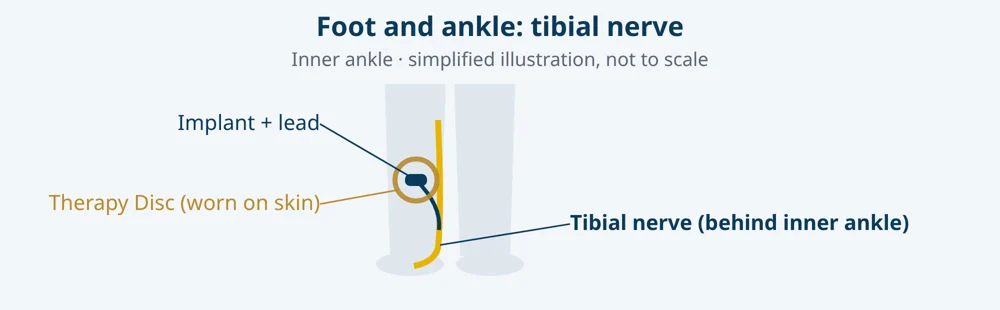
Tibial Nerve Stimulation for Neuropathy Pain
A trial-first option that may ease burning or shooting foot pain in the area served by the tibial nerve.
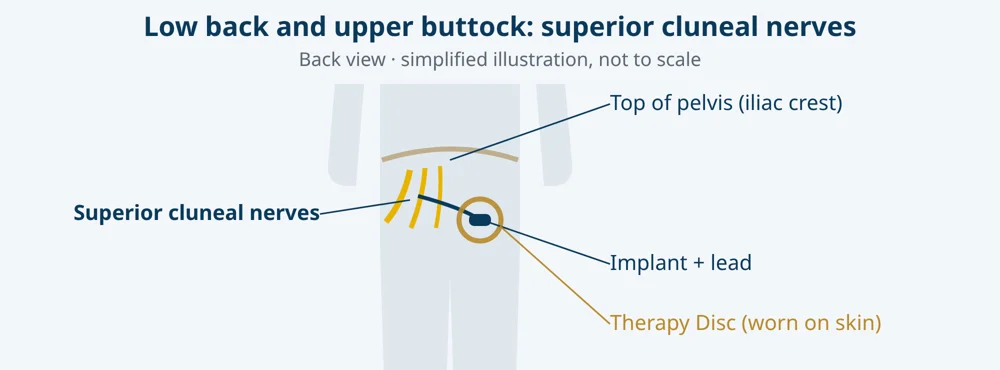
PNS for Low Back and Buttock Pain
A trial-first option that may ease long-lasting pain over the top of the buttock and low back when it comes from the cluneal nerves.
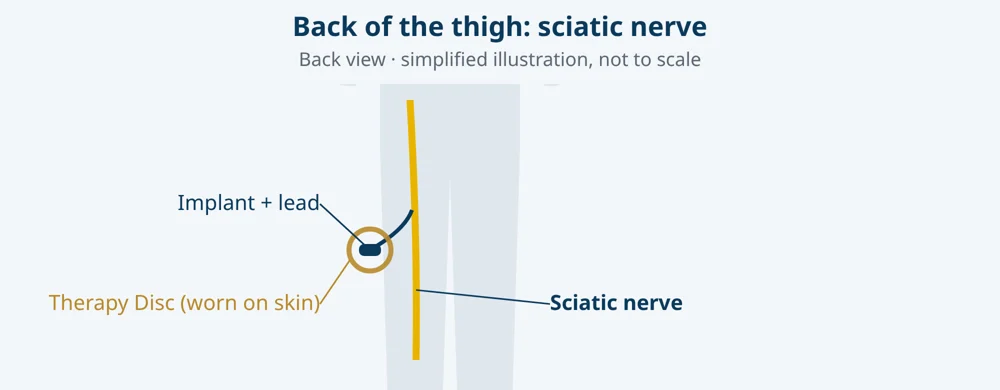
PNS for Leg Nerve Pain
A trial-first option that may ease long-lasting nerve pain in the leg or foot that comes from the sciatic nerve or its branches.
More: The Nalu™ neurostimulation system · PNS for peripheral neuropathy pain · Blog: PNS for chronic pain
Patient brochures (print-ready PDFs)
Each brochure is 4 pages. Choose Print at home/office (Letter) for a regular printer, or Print shop (with bleed) for a professional printer.
- PNS for Knee Pain (genicular and saphenous nerves)Print at home/office (Letter)Print shop (with bleed)
- PNS for Shoulder Pain (suprascapular and axillary nerves)Print at home/office (Letter)Print shop (with bleed)
- Tibial Nerve Stimulation for Neuropathy Pain (tibial nerve (foot and ankle))Print at home/office (Letter)Print shop (with bleed)
- PNS for Low Back and Buttock Pain (superior cluneal nerves)Print at home/office (Letter)Print shop (with bleed)
- PNS for Leg Nerve Pain (the sciatic nerve)Print at home/office (Letter)Print shop (with bleed)
Nalu™ is a trademark of Nalu Medical, Inc. GSMC is not affiliated with the manufacturer, and this guide is not provided or endorsed by it.
Watch: how peripheral nerve stimulation works
Video: “An Overview of SPRINT PNS” from SPR on YouTube. SPRINT PNS is one brand of peripheral nerve stimulation system, made by SPR Therapeutics. GSMC may recommend a different system based on your needs. It loads from youtube-nocookie.com only when you press play. Shown for general education; GSMC did not produce it. Watch on YouTube
How it works
Using ultrasound or X-ray guidance, the physician places one or more thin leads near the target nerve through a needle. The lead connects to a small stimulator. With some systems the stimulator is worn on the skin; with others a small device is placed under the skin. The pulses are adjusted to cover your pain area and are often felt as a mild tingling or pulsing, or sometimes not at all.
Who it may be for
- Chronic nerve pain in one area, such as after an injury or surgery
- Chronic knee, shoulder, back or limb pain that has not improved with other care
- Pain from a single irritated or injured nerve
- People who want to avoid or reduce pain medicines, or who are not candidates for other procedures
Your exam and imaging decide whether this treatment is appropriate for you.
What to expect
- Before: an exam and review of your history and imaging to see if PNS fits your pain. Some medicines, such as blood thinners, may need to be paused.
- Placement: an outpatient procedure with local numbing, usually under ultrasound or X-ray guidance. Most people go home the same day.
- Use: you use the stimulator at home and keep track of your pain and activity. Your care team adjusts the settings as needed.
- Follow-up: temporary leads are removed in the office at the end of the treatment period. If a long-term system is chosen, it is placed in a separate procedure.
Recovery
Most people return to light activity within a day or two. Keep the site clean and dry and follow your instructions about showering, lifting and activity. Your instructions may differ.
Risks and side effects
Every procedure has risks. Your physician will review them with you, including:
- Infection at the lead site
- Skin irritation from the adhesive or bandage
- Lead movement or breakage
- Bleeding or bruising
- Pain may not improve
Insurance and cost
Many plans, including Medicare, may cover this treatment when criteria are met. We verify benefits before scheduling. See accepted insurance.
Frequently asked questions
How is PNS different from spinal cord stimulation?
Spinal cord stimulation places leads near the spinal cord to cover wider areas of pain. PNS places a lead near a single nerve outside the spine for pain in one area. Your physician can explain which may fit your pain.
Will I feel the stimulation?
Many people feel a mild tingling or pulsing. Some systems are set so you may not feel much at all.
Is it permanent?
It depends on the system. Some PNS systems are used for about 60 days and then removed. Others can stay in place long term after a successful trial.
This page is general patient education and does not replace advice from your own clinician. Individual results vary.