
Service resuming soon. GSMC is restarting ketamine infusion therapy. Please call 732-202-3000 for current availability and scheduling.
GSMC is led by Dr. Dharam Mann, who completed fellowships in pain management, cardiac anesthesia and critical care at Massachusetts General Hospital/Harvard.
Patient brochure (PDF) All procedures & brochures
Overview
Ketamine is a medicine that has long been used for anesthesia. At lower doses, given slowly through an IV, it may help reduce some types of long-lasting pain. It acts on pain pathways in the nervous system in a different way than many pain medicines. Ketamine infusions may help some people with complex regional pain syndrome (CRPS), fibromyalgia or chronic pain that has not responded to other treatments. Results vary, relief is often temporary, and it is not right for everyone. Careful screening comes first.
What it is
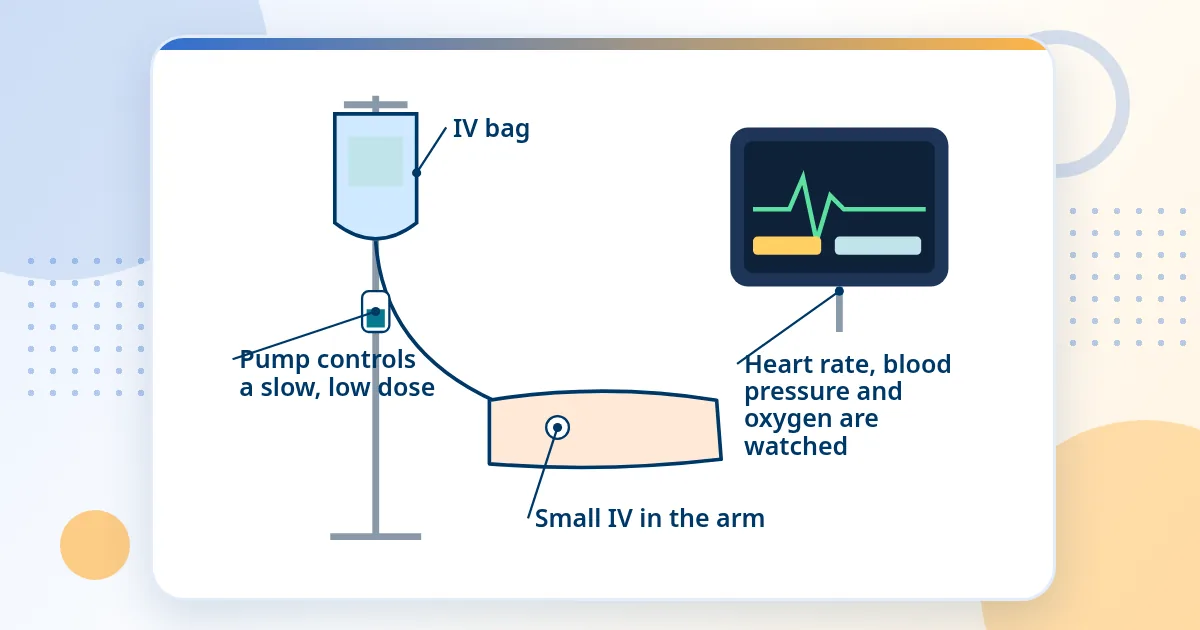
A ketamine infusion is a slow, low-dose IV drip given over a set time while you are watched by trained staff. Ketamine is thought to work partly by blocking NMDA receptors, which play a role in how the nervous system can become more sensitive to pain over time.
Ketamine is FDA-approved as an anesthetic. Its use for chronic pain is "off-label," which means doctors may use it for pain based on research and experience, but it is not FDA-approved for that purpose. The research is still growing, and the right dose and schedule are not yet settled.
Who it's for
Ketamine infusions may be considered for some adults with:
- Complex regional pain syndrome (CRPS)
- Fibromyalgia
- Chronic nerve pain or other chronic pain that has not responded to other treatments, such as medicines, therapy, injections or neuromodulation
What the procedure involves, step by step
- Screening visit: we review your medical history, heart health, blood pressure, mental health history, medicines and any substance use. Some people may need lab work or a heart test.
- Arrival: you arrive with an adult who will drive you home. Follow the eating and drinking instructions you are given.
- IV and monitoring: a small IV is placed in your arm. Your blood pressure, heart rate and oxygen level are monitored the whole time in a monitored setting.
- Infusion: ketamine is given slowly. Sessions often last a few hours, depending on the plan. Staff stay nearby and can slow or stop the infusion if needed.
- Recovery: you rest until the effects wear off and your vital signs are stable.
- A series of sessions: treatment is usually given as a series, for example several sessions over one to two weeks. Some people later have occasional "booster" sessions if the first series helped.
Recovery and what to expect
During and after the infusion, you may notice:
- Dissociation: feeling dreamy, floating or "outside your body," or changes in vision or sound. This usually fades soon after the infusion.
- Nausea or vomiting. Medicine may be given to help.
- Blood pressure and heart rate changes, usually a rise. This is why you are monitored.
- Dizziness, tiredness, headache or blurred vision.
A driver is required. You must not drive, operate machinery or make major decisions for the rest of the day. Plan to rest at home. Relief, if it happens, may last days to weeks and varies from person to person.
Candidacy and screening: who should not have it
May be a good fit: adults with CRPS, fibromyalgia or chronic pain that has not responded to other treatments, who pass screening and can commit to the series and the safety rules.
Should not have ketamine, or need extra review first, if they have:
- Uncontrolled high blood pressure, or serious heart disease such as recent heart attack, unstable chest pain or heart failure
- A history of psychosis, schizophrenia or similar conditions
- A current or past substance use disorder, including ketamine misuse
- Pregnancy or breastfeeding
- Serious liver disease
- Increased pressure in the brain or eye (such as certain kinds of glaucoma)
- Uncontrolled overactive thyroid
- An allergy or bad reaction to ketamine in the past
Our physicians will review your health and medicines in detail before any infusion.
Risks in brief
Common side effects include dissociation, nausea, dizziness and raised blood pressure or heart rate during the infusion. Less common risks include anxiety or upsetting dream-like experiences, confusion, slowed breathing and IV site problems. Repeated or frequent use can, rarely, affect the bladder or liver, which is one reason sessions are spaced and monitored. Ketamine can be misused, so it is only given in our monitored setting. Pain may not improve.
Alternatives
Other options may include medicines for nerve pain, physical and occupational therapy, pain psychology, sympathetic nerve blocks (for CRPS), spinal cord or dorsal root ganglion stimulation and other interventional treatments.
Frequently asked questions
Is ketamine FDA-approved for chronic pain?
No. Ketamine is FDA-approved as an anesthetic. Using it for chronic pain is off-label, based on research that is still growing.
What does a ketamine infusion feel like?
Many people feel dreamy, relaxed or detached during the infusion. Some feel nauseated or dizzy. These effects usually fade soon after the infusion ends.
How many sessions will I need?
Treatment is usually given as a series of sessions. Your physician will suggest a plan based on your condition and response.
Can I drive myself home?
No. You must have an adult drive you home, and you should not drive for the rest of the day.
Does insurance pay for ketamine infusions?
No. Ketamine infusions at GSMC are self-pay only. There is no insurance billing for ketamine infusions. Our team can explain pricing before you start.
Is ketamine infusion available now?
GSMC is restarting this service. Please call 732-202-3000 for current availability.
Self-pay
Ketamine infusion therapy at GSMC is self-pay only. There is no insurance billing for ketamine infusions. Our team can explain pricing before you start.
Ketamine infusion therapy is resuming at GSMC. Please call 732-202-3000 for current availability.
Where to get ketamine infusion therapy near you
GSMC has 7 offices in Ocean and Monmouth County, with one phone number for all of them. Call 732-202-3000 to confirm which office offers ketamine infusion therapy.
- Toms River1314 Hooper Ave, 1st Floor, Toms River, NJ 08753Get directions · 732-202-3000
- Brick1608 NJ-88, Suite 102, Brick Township, NJ 08724Get directions · 732-202-3000
- Whiting1100 NJ-70, Entrance B, Whiting, NJ 08759Get directions · 732-202-3000
- Barnegat249 S Main St, Suite 5, Barnegat Township, NJ 08005Get directions · 732-202-3000
- Manahawkin1109 Beacon Ave, Manahawkin, NJ 08050Get directions · 732-202-3000
- Freehold322 Professional View Dr, 300 Building, 2nd Floor, Freehold, NJ 07728Get directions · 732-202-3000
- West Long Branch100 NJ-36, Suite 1K, West Long Branch, NJ 07764Get directions · 732-202-3000
Patients come to us from Toms River, Brick, Lakewood, Jackson, Manchester, Whiting, Lacey, Barnegat, Manahawkin, Long Beach Island, Little Egg Harbor, Tuckerton, Freehold, Howell, Marlboro, Manalapan, Wall, West Long Branch, Long Branch, Eatontown, Red Bank, Neptune, Point Pleasant and other towns across Ocean and Monmouth County.
Nearby hospitals and imaging centers
Our offices are a short drive from these area hospitals and imaging centers:
- Community Medical Center (Toms River), near our Toms River office
- Ocean University Medical Center (Brick), near our Brick office
- Monmouth Medical Center Southern Campus (Lakewood), near our Brick office
- Southern Ocean Medical Center (Manahawkin), near our Manahawkin office
- CentraState Medical Center (Freehold), near our Freehold office
- Monmouth Medical Center (Long Branch), near our West Long Branch office
- Jersey Shore University Medical Center (Neptune), near our West Long Branch office
- Riverview Medical Center (Red Bank), near our West Long Branch office
- University Radiology (Toms River), near our Toms River office
- New Jersey Imaging Network - Toms River East (Toms River), near our Toms River office
- Atlantic Medical Imaging (Brick, Toms River, Manahawkin and Wall)
Listed for directions only.
Book an appointment
One phone number for all 7 GSMC offices in Ocean and Monmouth County.
Our offices
- Whiting
- Toms River (1314 Hooper Ave)
- Brick
- Barnegat
- Manahawkin
- Freehold (322 Professional View Dr)
- West Long Branch
Telehealth visits are available for second opinions and imaging reviews only, by phone. Please call 732-202-3000 to book one.
This page is general patient education and does not replace advice from your own clinician. Individual results vary, and no outcome can be promised.