

Sciatica Treatment Options: A Pain Specialist's Guide
Oct 10, 2026
By Dharam P. Mann, MD, Garden State Medical Center
Sciatica can stop you in your tracks. You bend to tie your shoe, and suddenly a sharp pain shoots from your low back down your leg, making it hard to sit, walk, or sleep.
I'm Dr. Dharam Mann, a board-certified interventional pain specialist at Garden State Medical Center. I went to medical school in India. Then I did my anesthesia residency in the United States and fellowships in cardiac anesthesia, critical care, and pain management at Massachusetts General Hospital / Harvard Medical School. Today I see patients at our Toms River, Manahawkin, Whiting, Freehold, and West Long Branch offices. Here is how I explain sciatica and its treatment options to my patients.
What Is Sciatica?
Sciatica is not a disease. It is a name for symptoms that happen when a nerve root in your low back gets pinched or irritated. These nerve roots join to form the sciatic nerve, which runs from your low back, through your buttock, and down the back of each leg.
When the nerve is irritated, you may feel:
- Pain that travels from your buttock down your leg, often below the knee
- Burning, tingling, or a "pins and needles" feeling
- Numbness in your leg or foot
- Weakness in your leg or foot
- Pain that gets worse when you sit, cough, or sneeze
For a broader overview of symptoms and relief across the state, see our article on sciatica symptoms, causes and relief in New Jersey. You can also visit our main sciatica condition page.
Common Causes of Sciatica
Herniated Disc
Discs are soft cushions between the bones of your spine. With age or strain, the soft center of a disc can push out through a weak spot and press on a nearby nerve root. This is a frequent cause of sciatica that I see. You can learn more on our herniated disc page.
Spinal Stenosis
Spinal stenosis means the spaces around your nerves have become too narrow. It often comes from wear and tear over many years. Thick ligaments, bone spurs, and worn discs can all crowd the nerves. People with stenosis often feel leg pain when they stand or walk. The pain may ease when they sit down or lean forward, like on a shopping cart.
Other Causes
Less often, sciatica comes from:
- Spondylolisthesis, when one bone in the spine slips forward over another
- Piriformis syndrome, when a tight buttock muscle irritates the nerve
- Rare causes, such as an infection or a tumor near the spine
When to See a Doctor
Mild sciatica often gets better over a few weeks with rest and simple care. I suggest you see a doctor if:
- Your pain lasts more than a few weeks
- Your pain keeps getting worse
- The pain keeps you from working, sleeping, or doing daily tasks
- You have numbness or tingling that does not go away
Red Flags: Get Urgent Care Right Away
These symptoms can mean serious nerve pressure. Go to the emergency room or call 911 if you have sciatica along with any of these:
- Loss of control of your bladder or bowels
- Numbness in your groin, inner thighs, or "saddle" area (the part of your body that would touch a saddle)
- Leg weakness that is getting worse, or a foot that drags
- Back or leg pain after major trauma, such as a car crash or a bad fall
- Fever along with back pain
Conservative Treatment Options
For most people, I start with simple, low-risk care that gives your body time to heal.
Physical therapy. A physical therapist can teach you stretches and exercises that take pressure off the nerve and build strength in your core and hips.
Activity changes. Long bed rest is not usually helpful. Try to stay gently active with short walks, and avoid heavy lifting and long periods of sitting for a while.
Sleep positions. Many of my patients find relief by sleeping on their side with a pillow between their knees. If you sleep on your back, try a pillow under your knees.
Heat and ice. Ice can help calm pain in the first few days. After that, heat may help loosen tight muscles. Use either one for about 15 to 20 minutes at a time, with a cloth between your skin and the pack.
Over-the-counter medicines. Pain relievers such as ibuprofen, naproxen, or acetaminophen may help. Please ask your doctor first. These medicines are not safe for everyone, such as people with kidney problems, stomach ulcers, or those taking blood thinners.
Interventional Treatment Options
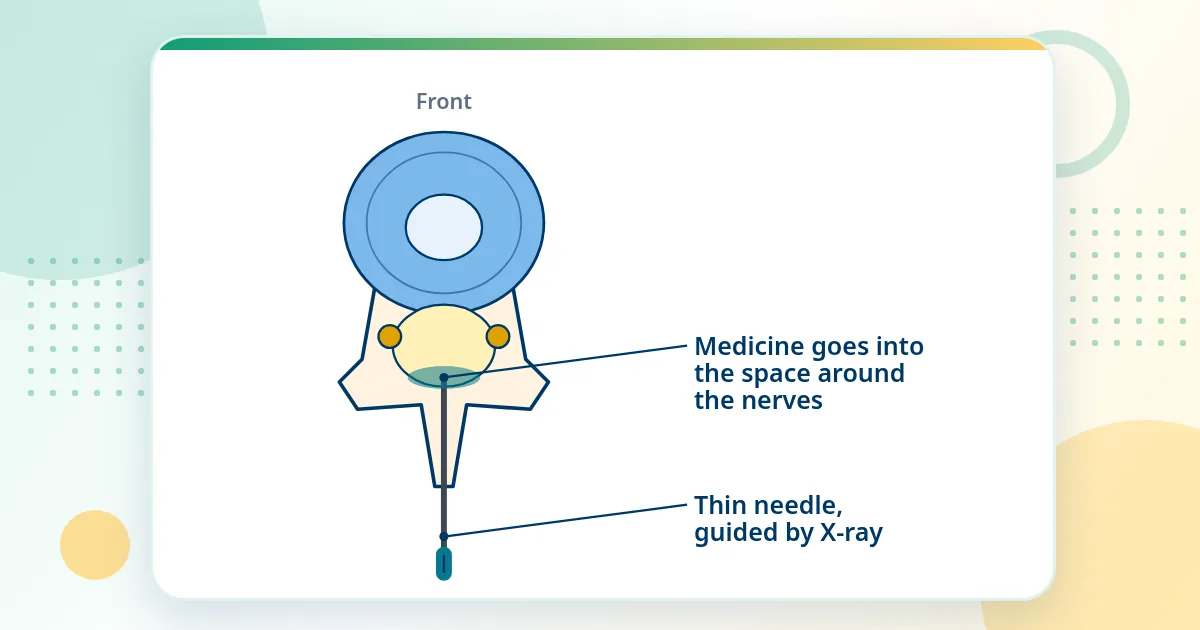
If your pain does not improve with conservative care, I may suggest an injection. These are short outpatient procedures, and I use X-ray guidance to place the medicine in the right spot.
Epidural Steroid Injections
An epidural steroid injection places a steroid medicine near the irritated nerve roots. The steroid works to calm swelling and irritation around the nerve.
I want you to have honest expectations. When it helps, relief typically lasts weeks to months. It is not a permanent fix, and some people get more relief than others. Injections are meant to be one part of a plan that includes PT, so I encourage you to use that window to build strength.
Selective Nerve Root Blocks
A selective nerve root block targets one specific nerve root. It can help confirm which nerve is causing your pain, and it may ease that pain for a time. Like an epidural, relief is usually temporary and is meant to be paired with therapy.
When Surgery May Be Discussed
I do not perform open spine surgery, but part of my job is knowing when it may be the right step. I may discuss a referral to a spine surgeon if:
- You have leg weakness that is getting worse
- You have signs of serious nerve pressure, like the red flags above
- Your pain stays severe after several months of good conservative care and injections
- Your imaging shows a problem that is likely to respond to surgery
Choosing surgery is a personal decision, and I will help you understand your options.
Get Help for Sciatica in Monmouth and Ocean County
You do not have to face sciatica alone. I welcome patients from across Monmouth and Ocean County, including nearby towns like Howell and Long Branch. I will review your history and imaging and build a plan that fits your goals.
Call 732-202-3000 or request a consultation to book your visit.
Frequently Asked Questions
How long does sciatica usually last?
Many cases get better within a few weeks with gentle activity and physical therapy. Some last longer or come back. If your pain lasts more than a few weeks or keeps getting worse, see a doctor.
Is an epidural steroid injection a permanent cure for sciatica?
No. An epidural steroid injection can calm nerve irritation. Relief often lasts weeks to months, but it is not permanent. It is meant to be combined with physical therapy and healthy activity.
When is sciatica an emergency?
Go to the ER right away if you have loss of bladder or bowel control, numbness in your groin or saddle area, leg weakness that is getting worse, pain after major trauma, or fever with back pain.
Medical disclaimer: This article is for general education only and is not medical advice. Please talk with your own doctor about your symptoms and treatment. Individual results vary.