
From a farming village in India to minimally invasive spine specialist
Dharam P. Mann, MD, grew up in a farming family in a village in India and did not learn the alphabet until 8th grade. He went on to earn a full scholarship to medical school, trained as a surgeon in India, and then trained in anesthesia, critical care and pain management at Massachusetts General Hospital and Harvard Medical School in Boston. Today he is an interventional pain and minimally invasive spine physician at Garden State Medical Center (GSMC) in Ocean and Monmouth County, NJ.
See Dr. Mann’s full profile, offices and conditions treated →
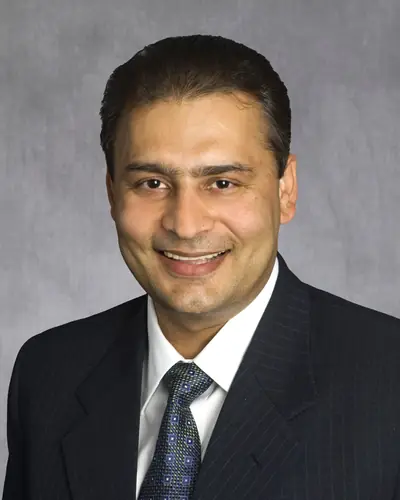
His journey
Dr. Mann’s path started in a village in India. Along the way, he chose to train in surgery, anesthesia, critical care and pain medicine.
- A village in India
Where it began
Dr. Mann grew up in a village in India, in a farming family.
He did not learn the alphabet until 8th grade. He still earned a full scholarship to medical school at the Post Graduate Institute of Medical Sciences (PGIMS) in Rohtak. It covered his tuition, boarding and meals.
- India
Surgeon in India
After medical school at PGIMS, Dr. Mann began his career as a well-trained surgeon in India.
- United States
A second residency, in anesthesia
After coming to the US, he chose to start again and do another residency, this time in anesthesia.
- Boston
Fellowships at MGH / Harvard Medical School
He then completed fellowships at Massachusetts General Hospital and Harvard Medical School in:
- Ocean & Monmouth County, NJ
Garden State Medical Center
Today he treats spine pain at GSMC, which has 7 offices and its own surgery center.
Why training matters for your spine
What does all of this training mean when you come in with back or neck pain? Here it is in plain words.
A surgeon’s eye for detail
Surgical training teaches how the body is built and how to work carefully inside it. For spine procedures, that means precise work through small openings or a needle, guided by imaging.
An anesthesiologist’s focus on comfort and safety
Anesthesia training is about keeping you safe and comfortable during a procedure, from your breathing and heart rate to the medicines used to numb or relax you.
Critical care and heart training
Caring for very sick patients and for heart patients teaches careful planning. That helps when someone has heart disease or other health conditions along with their spine pain.
Pain medicine at the center
Pain management training focuses on finding where the pain is really coming from and matching it with the least invasive option that fits you.
Put together, this background shapes how Dr. Mann treats spine pain: precise, minimally invasive and safety-focused.
GSMC awards and recognition
Honors Garden State Medical Center has received over the years, and what patients say online.
Spine, joint and pain procedures Dr. Mann performs
Grouped by type. Your exam and imaging decide which, if any, fit you.
Stenosis & disc 4
- MILD procedureMay help some people with lumbar spinal stenosis stand and walk longer.
- Interspinous spacer (Vertiflex / Superion)May ease leg pain from lumbar spinal stenosis for some people.
- Intracept (basivertebral nerve ablation)May help some people with chronic vertebrogenic low back pain.
- VIA Disc NPDisc supplementation for selected patients with degenerative disc pain.
Fractures, SI joint & spinal injections 7
- Kyphoplasty & vertebroplastyMay ease pain from some spine compression fractures.
- SI joint injectionMay help find and ease the source of low back and buttock pain.
- SI joint fusionA minimally invasive option for ongoing, confirmed SI joint pain.
- Epidural steroid injectionMay ease back, neck, arm or leg pain from irritated spinal nerves.
- Facet joint injection & medial branch blockHelp diagnose and treat neck and back pain from the small spinal joints.
- Selective nerve root blockTargets one spinal nerve to find and treat the source of arm or leg pain.
- Spinal radiofrequency ablationUses heat to interrupt pain signals from facet joints in the neck and low back, or the SI joint.
Spinal neuromodulation & pumps 6
- Spinal cord stimulationMay help some people with chronic back or leg pain, CRPS or nerve pain.
- Closed-loop spinal cord stimulation (Evoke)A spinal cord stimulator that adjusts as you move.
- High-frequency spinal cord stimulationSpinal cord stimulation with a 10 kHz waveform that is usually tingle-free.
- DRG stimulationStimulation at the spinal nerve roots for CRPS or nerve pain in one area.
- ReActiv8 restorative neurostimulationMay help some people with chronic mechanical low back pain.
- Intrathecal pain pumpDelivers medicine into the spinal fluid for some people with chronic or cancer pain.
Non-surgical joint procedures 11
- Joint injectionsSteroid injections that can reduce pain and swelling in the knee, hip, shoulder and other joints.
- Bursa injectionsMedicine placed into an inflamed bursa in the hip, shoulder, knee or elbow.
- ViscosupplementationHyaluronic acid injections for knee osteoarthritis pain.
- PRP therapyUses a concentrate of your own platelets for certain tendon and joint conditions.
- PRP for knee osteoarthritisMay help some people with knee osteoarthritis pain. Self-pay.
- PRP for shoulder painMay help some people with rotator cuff tendon pain or shoulder arthritis. Self-pay.
- PRP for hip painMay help some people with hip arthritis or gluteal tendon pain. Self-pay.
- Genicular nerve RFA (knee)May ease chronic knee arthritis pain or pain after knee surgery.
- Ultrasound-guided nerve injectionTargets specific nerves, such as the genicular nerves of the knee, to diagnose and treat pain.
- PNS for knee painMay help some people with chronic knee pain, including after knee replacement.
- PNS for shoulder painMay help some people with chronic shoulder pain.
Nerve blocks & nerve stimulation 3
- Lumbar sympathetic blockNumbs nerves in the low back to help diagnose or treat CRPS and other nerve pain in the legs.
- Stellate ganglion blockNumbs nerves in the neck to help diagnose or treat certain pain conditions of the head, neck and arm.
- PNS for peripheral neuropathyMay help some people with nerve pain in the feet or legs.
Patient stories
Two GSMC patients describe their own experience in their own words. Individual results vary.
Jayne Crognale: her spinal cord stimulator story
Video on YouTube, posted by Dharam Mann, MD (gsmedicalcenter). A GSMC patient describes her own experience with a spinal cord stimulator. The video loads from youtube-nocookie.com when you press play. Watch on YouTube
Robert Lee: his spinal stenosis story
Video on YouTube, posted by TopDoc Marketing. A GSMC patient describes his own experience with the Vertiflex interspinous spacer. The video loads from youtube-nocookie.com when you press play. Watch on YouTube
In his words
I search out the newest minimally invasive techniques to relieve someone’s pain. It is incredibly rewarding when patients smile and thank me for helping them.
Where to see Dr. Mann near you
Dr. Mann and the GSMC team see patients across 7 offices in Ocean and Monmouth County. Call 732-202-3000 to ask which office and day work for you.
- Toms River1314 Hooper Ave, 1st Floor, Toms River, NJ 08753Get directions · 732-202-3000
- Brick1608 NJ-88, Suite 102, Brick Township, NJ 08724Get directions · 732-202-3000
- Whiting1100 NJ-70, Entrance B, Whiting, NJ 08759Get directions · 732-202-3000
- Barnegat249 S Main St, Suite 5, Barnegat Township, NJ 08005Get directions · 732-202-3000
- Manahawkin1109 Beacon Ave, Manahawkin, NJ 08050Get directions · 732-202-3000
- Freehold322 Professional View Dr, 300 Building, 2nd Floor, Freehold, NJ 07728Get directions · 732-202-3000
- West Long Branch100 NJ-36, Suite 1K, West Long Branch, NJ 07764Get directions · 732-202-3000
Patients come to us from Toms River, Brick, Lakewood, Jackson, Manchester, Whiting, Lacey, Barnegat, Manahawkin, Long Beach Island, Little Egg Harbor, Tuckerton, Freehold, Howell, Marlboro, Manalapan, Wall, West Long Branch, Long Branch, Eatontown, Red Bank, Neptune, Point Pleasant and other towns across Ocean and Monmouth County.
Nearby hospitals and imaging centers
Our offices are a short drive from these area hospitals and imaging centers:
- Community Medical Center (Toms River), near our Toms River office
- Ocean University Medical Center (Brick), near our Brick office
- Monmouth Medical Center Southern Campus (Lakewood), near our Brick office
- Southern Ocean Medical Center (Manahawkin), near our Manahawkin office
- CentraState Medical Center (Freehold), near our Freehold office
- Monmouth Medical Center (Long Branch), near our West Long Branch office
- Jersey Shore University Medical Center (Neptune), near our West Long Branch office
- Riverview Medical Center (Red Bank), near our West Long Branch office
- University Radiology (Toms River), near our Toms River office
- New Jersey Imaging Network - Toms River East (Toms River), near our Toms River office
- Atlantic Medical Imaging (Brick, Toms River, Manahawkin and Wall)
Listed for directions only.
This page is general information and does not replace advice from your own clinician. Individual results vary.