
Overview
Shoulder pain often comes from the rotator cuff, the group of tendons that helps lift and turn your arm, or from arthritis in the shoulder joint. Platelet-rich plasma, or PRP, is an injection made from your own blood. It may help some people with rotator cuff tendinopathy (tendon irritation or wear), some partial rotator cuff tears or shoulder arthritis. The research is still growing and results are mixed, so we will talk honestly about what PRP may and may not do. PRP is usually self-pay.
GSMC is led by Dr. Dharam Mann, who completed fellowships in pain management, cardiac anesthesia and critical care at Massachusetts General Hospital/Harvard.
Watch: how PRP treatment works
Video: “Platelet-rich Plasma Treatment for Injured Tendons, Muscles and Joints” from Hospital for Special Surgery on YouTube. It loads from youtube-nocookie.com only when you press play. Shown for general education; GSMC did not produce it. Watch on YouTube
What it is
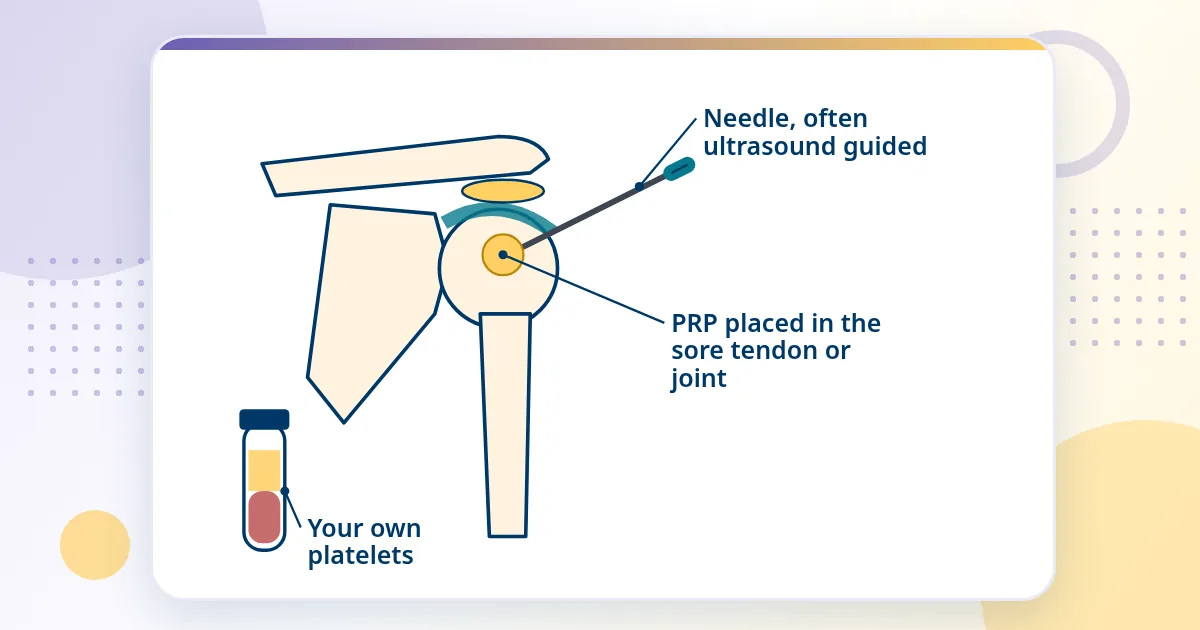
PRP is made from a small sample of your own blood. The blood is spun in a machine called a centrifuge, which separates out a layer with a high number of platelets. Platelets contain growth factors that play a role in the body's normal healing process. That platelet-rich layer is then injected into the area that hurts, often with ultrasound guidance.
PRP is not FDA-approved to treat any specific condition. The devices used to prepare it are FDA-cleared. Preparation methods differ, which is one reason study results vary.
For the shoulder, PRP may be injected near or into a tendon, or into the shoulder joint, depending on the cause of your pain.
Who it's for
PRP for the shoulder may be considered for people who have:
- Rotator cuff tendinopathy (tendon irritation or wear)
- Some partial-thickness rotator cuff tears
- Shoulder (glenohumeral) arthritis
- Pain that has not improved enough with physical therapy, activity changes or medicines
- A clear understanding of the evidence and cost
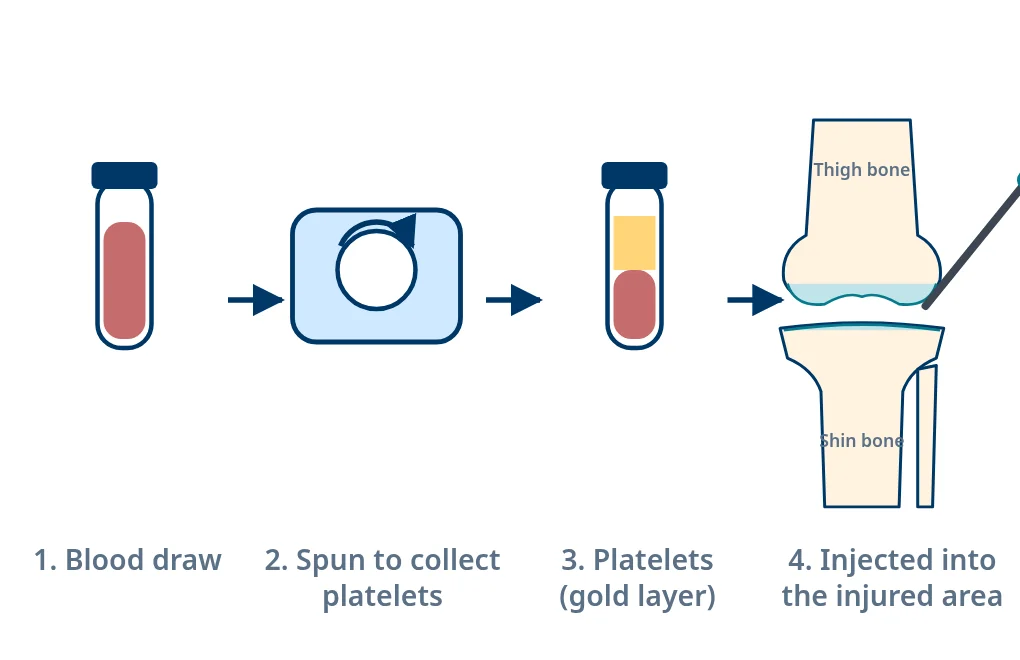
What the procedure involves, step by step
- Before: we review your exam and imaging. You may be asked to stop anti-inflammatory medicines (such as ibuprofen or naproxen) for a period before and after the injection, because they may affect platelets. Ask before stopping any prescribed medicine.
- Blood draw: a small amount of blood is drawn from your arm, much like a routine blood test.
- Processing: the blood is spun in a centrifuge for several minutes to concentrate the platelets.
- Injection: the skin is cleaned and numbed. Using ultrasound guidance, your physician injects the PRP into the affected tendon or the shoulder joint.
- After: you rest briefly and go home the same day. The whole visit often takes about an hour.
Recovery and what to expect
- Shoulder soreness for several days is common.
- You may be asked to rest the shoulder for a short time, then start or continue a physical therapy program. Therapy is an important part of recovery.
- Avoid anti-inflammatory medicines for the period you are told.
- Any benefit, if it happens, usually builds over several weeks to a few months. Some people notice little or no change.
Candidacy: who may or may not be a good fit
May be a good fit: people with tendon-related shoulder pain or shoulder arthritis that has not improved enough with therapy, who understand the evidence is mixed and that it is usually self-pay.
May not be a good fit: people with a low platelet count or another blood disorder, an active infection, active cancer, anemia, blood thinners that cannot be safely paused, or recent steroid injections in the same area. It is also not a good fit for anyone expecting a certain result or who would have trouble with the cost. Large or full-thickness rotator cuff tears, a frozen shoulder, or shoulder weakness after an injury may need a different plan or a surgical opinion.
Risks in brief
Because PRP comes from your own blood, allergic reactions are unlikely. Risks include pain, swelling or stiffness for several days, bruising, and, rarely, infection or nerve injury. The pain may not improve. We will review your specific risks.
Alternatives
Other options may include physical therapy, activity changes, medicines, steroid injections, nerve blocks, peripheral nerve stimulation or a referral for shoulder surgery.
Frequently asked questions
Can PRP heal a rotator cuff tear?
PRP may help pain from tendon irritation and some partial tears, but it is not shown to heal a full tear. Large or full tears may need a surgical opinion.
Do I still need physical therapy?
Yes. Therapy is an important part of recovery and helps strengthen the shoulder.
How soon might I feel a change?
If PRP helps, the change usually builds over several weeks to a few months. Some people notice little or no change.
How many injections will I need?
It varies. Many people start with one injection, and your physician will review your progress.
Is PRP FDA-approved?
The devices used to prepare PRP are FDA-cleared, but PRP is not FDA-approved to treat any specific condition.
Does insurance pay for PRP?
PRP is often not covered by insurance, including many Aetna plans, and is usually self-pay. Our team can explain costs and check your plan before treatment.
Insurance and cost
PRP is often not covered by insurance, including many Aetna plans, and is usually self-pay. Our team can explain costs and check your plan before treatment. We cannot promise coverage for any plan.
Where to get PRP injections for the shoulder near you
GSMC has 7 offices in Ocean and Monmouth County, with one phone number for all of them. Call 732-202-3000 to confirm which office offers PRP injections for the shoulder.
- Toms River1314 Hooper Ave, 1st Floor, Toms River, NJ 08753Get directions · 732-202-3000
- Brick1608 NJ-88, Suite 102, Brick Township, NJ 08724Get directions · 732-202-3000
- Whiting1100 NJ-70, Entrance B, Whiting, NJ 08759Get directions · 732-202-3000
- Barnegat249 S Main St, Suite 5, Barnegat Township, NJ 08005Get directions · 732-202-3000
- Manahawkin1109 Beacon Ave, Manahawkin, NJ 08050Get directions · 732-202-3000
- Freehold322 Professional View Dr, 300 Building, 2nd Floor, Freehold, NJ 07728Get directions · 732-202-3000
- West Long Branch100 NJ-36, Suite 1K, West Long Branch, NJ 07764Get directions · 732-202-3000
Patients come to us from Toms River, Brick, Lakewood, Jackson, Manchester, Whiting, Lacey, Barnegat, Manahawkin, Long Beach Island, Little Egg Harbor, Tuckerton, Freehold, Howell, Marlboro, Manalapan, Wall, West Long Branch, Long Branch, Eatontown, Red Bank, Neptune, Point Pleasant and other towns across Ocean and Monmouth County.
Nearby hospitals and imaging centers
Our offices are a short drive from these area hospitals and imaging centers:
- Community Medical Center (Toms River), near our Toms River office
- Ocean University Medical Center (Brick), near our Brick office
- Monmouth Medical Center Southern Campus (Lakewood), near our Brick office
- Southern Ocean Medical Center (Manahawkin), near our Manahawkin office
- CentraState Medical Center (Freehold), near our Freehold office
- Monmouth Medical Center (Long Branch), near our West Long Branch office
- Jersey Shore University Medical Center (Neptune), near our West Long Branch office
- Riverview Medical Center (Red Bank), near our West Long Branch office
- University Radiology (Toms River), near our Toms River office
- New Jersey Imaging Network - Toms River East (Toms River), near our Toms River office
- Atlantic Medical Imaging (Brick, Toms River, Manahawkin and Wall)
Listed for directions only.
Book an appointment
One phone number for all 7 GSMC offices in Ocean and Monmouth County.
Our offices
- Whiting
- Toms River (1314 Hooper Ave)
- Brick
- Barnegat
- Manahawkin
- Freehold (322 Professional View Dr)
- West Long Branch
Telehealth visits are available for second opinions and imaging reviews only, by phone. Please call 732-202-3000 to book one.
This page is general patient education and does not replace advice from your own clinician. Individual results vary, and no outcome can be promised.