
Spinal Cord Stimulation After Failed Back Surgery
Oct 16, 2026
By the GSMC pain management team
Some people still have back or leg pain after spine surgery, or the pain comes back months later. This is sometimes called failed back surgery syndrome, or post-laminectomy syndrome. If more surgery is not a good fit and other care has not helped enough, spinal cord stimulation (SCS) may be an option. This guide explains how it works and how a trial week lets you test it first.
This is Day 6 of our spine and sciatica series. Day 5 covered radiofrequency ablation: what to expect.
Why pain can continue after back surgery
Ongoing pain after surgery does not mean anyone did something wrong. Scar tissue, nerve irritation, changes at nearby spine levels or nerve damage from before surgery can all play a part. Leg pain from an irritated nerve (radicular pain) is often the hardest to settle.
What is spinal cord stimulation?
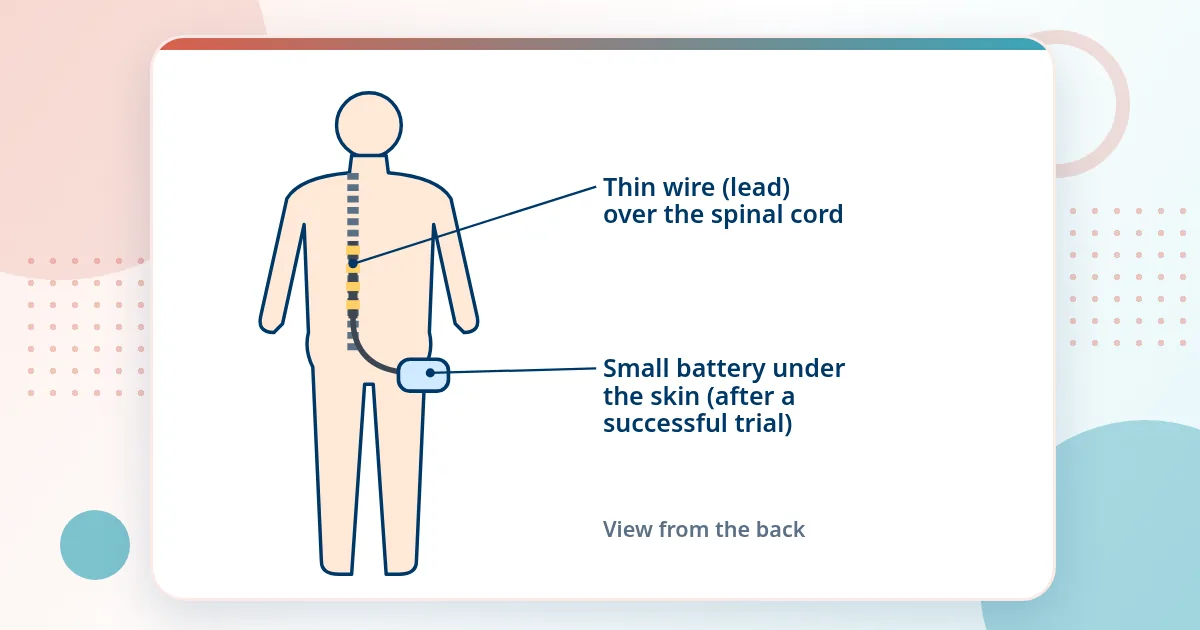
Spinal cord stimulation uses thin wires (leads) placed in the space over the spinal cord. A small device sends mild electrical pulses that change how pain signals reach the brain. Many newer systems give relief without a tingling feeling. A handheld remote lets you adjust settings.
Who may be a candidate?
- Back or leg pain that has lasted at least 6 months, including pain after spine surgery.
- Pain that has not improved enough with physical therapy, medicines and injections.
- No condition that needs another operation right away.
- A psychological evaluation, which many insurance plans require before a trial.
The trial week
SCS starts with a trial, so you can see whether it helps before deciding on a long-term device. In an outpatient visit, temporary leads are placed through a needle using X-ray guidance. They connect to a small device you wear on a belt. For about 5 to 7 days, you go about your normal routine and track your pain, sleep and activity.
- Keep the area dry, so plan on sponge baths instead of showers.
- Avoid bending, twisting and lifting during the trial so the leads stay in place.
- Write down which activities are easier, such as walking, standing or sleeping through the night.
- At the end of the week, the temporary leads are removed in the office.
Many people consider the trial a success when pain drops by about half and daily activity improves.
If the trial helps
If the trial helps, a long-term system can be placed in a minimally invasive outpatient procedure. The device sits under the skin, often near the buttock or flank. Many people go home the same day and slowly return to normal activity over a few weeks.
Risks
Every procedure has risks. These include infection, bleeding, a headache from a spinal fluid leak, soreness at the device site and the leads moving out of place, which may need a follow-up adjustment. Nerve injury is rare. Our team will go over your specific risks before the trial.
Call us right away if you have fever or chills, redness or drainage at the site, or new weakness or numbness. Call 911 for trouble breathing, chest pain, or loss of bladder or bowel control.
Other options our team may discuss
- Epidural steroid injections for flares of leg pain.
- Radiofrequency ablation when facet joints add to back pain.
- Physical therapy to build strength and keep you moving.
Spinal cord stimulation at GSMC
Our team evaluates ongoing back and leg pain after surgery at all 7 GSMC offices in Ocean and Monmouth County: Whiting, Toms River, Brick, Barnegat, Manahawkin, Freehold and West Long Branch. Call to confirm which office offers SCS trials for your visit. Many plans, including Medicare, cover SCS when criteria are met, and we verify your benefits and arrange any required evaluations before scheduling.
Call 732-202-3000 or request a consultation.
Frequently Asked Questions
Can spinal cord stimulation help after failed back surgery?
For some people, yes. SCS is often used for ongoing back and leg pain after spine surgery when other care has not helped enough. The trial week shows whether it helps you.
How long is a spinal cord stimulator trial?
A trial usually lasts about 5 to 7 days. The temporary leads are then removed in the office.
Is a spinal cord stimulator permanent?
No. The system can be adjusted, turned off or removed if needed.
Does the trial hurt?
The skin is numbed first, and many people feel pressure. Some soreness near the lead site for a few days is common.
Does Medicare cover spinal cord stimulation?
Medicare and many other plans cover SCS when criteria are met, often including a psychological evaluation and a successful trial. We verify your benefits before scheduling.
Medical disclaimer: This article is for general education only and is not medical advice. Please talk with your own doctor about your symptoms and treatment. Individual results vary.