

Rheumatoid Arthritis Symptoms in Hands: What to Look For
Sep 01, 2026
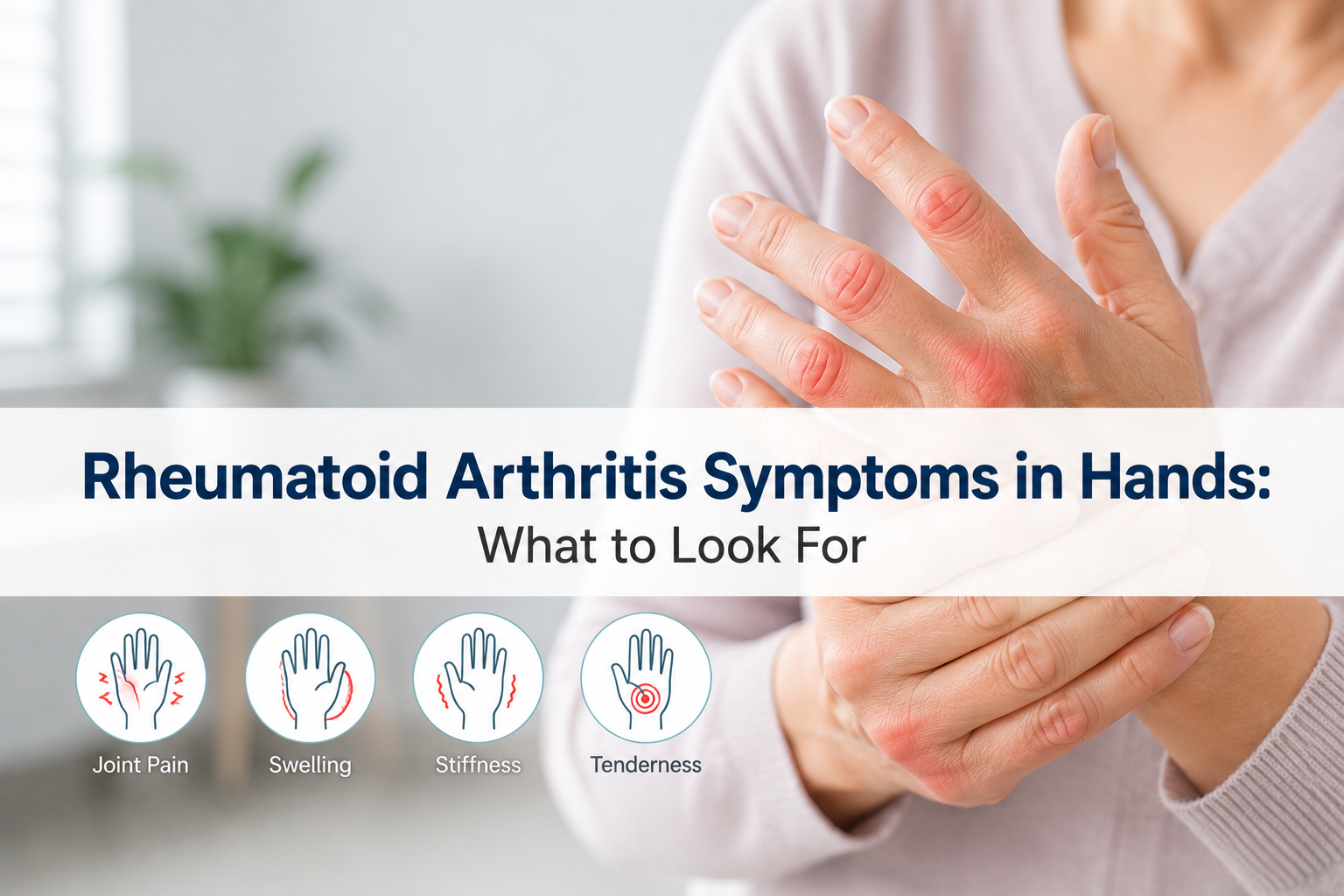
Rheumatoid arthritis (RA) can affect the small joints of the hands and wrists, causing pain, swelling, stiffness, and difficulty with everyday activities. Unlike ordinary soreness, rheumatoid arthritis is an autoimmune condition in which the immune system mistakenly attacks healthy joint tissue.
If you are experiencing persistent hand pain or stiffness, recognizing the early symptoms of rheumatoid arthritis can help you know when it may be time to see a rheumatologist.
At Garden State Medical Center, patients throughout New Jersey can receive evaluation and personalized care for rheumatoid arthritis, arthritis, and other autoimmune conditions.
What Are the Symptoms of Rheumatoid Arthritis in the Hands?
Rheumatoid arthritis can affect people differently, but several symptoms are commonly associated with RA in the hands.
1. Persistent Hand and Finger Pain
Pain in the fingers, knuckles, hands, or wrists may be an early sign of rheumatoid arthritis. The discomfort can occur during movement or even while resting.
If hand pain continues or repeatedly returns without an obvious injury, consider discussing it with a healthcare professional.
2. Swollen Knuckles or Fingers
Inflammation can cause the joints in your fingers or hands to become swollen, tender, or warm.
You may notice that your rings feel tighter or that your fingers look puffy. Swelling may also make it harder to bend or straighten your fingers.
3. Morning Stiffness
One of the common rheumatoid arthritis symptoms in hands is prolonged stiffness after waking up.
RA-related joint stiffness commonly lasts longer than 30 minutes and may also occur after sitting or resting for an extended period.
You might have difficulty making a fist, gripping objects, or moving your fingers normally when you first get up.
4. Difficulty Making a Fist
Swelling and inflammation can reduce the normal range of motion in your hands.
You may notice difficulty:
- Making a fist
- Opening jars
- Buttoning clothes
- Holding utensils
- Gripping a steering wheel
These changes can interfere with everyday activities and may indicate that your hand symptoms deserve evaluation.
5. Symptoms in Both Hands
Rheumatoid arthritis often affects joints in a symmetrical pattern. For example, inflammation affecting the right hand may also affect similar joints in the left hand.
However, symptoms do not always develop identically on both sides.
Rheumatoid Arthritis vs. Osteoarthritis in the Hands
Not all hand pain is caused by rheumatoid arthritis.
Rheumatoid arthritis is an autoimmune inflammatory disease that commonly causes prolonged stiffness, swelling, tenderness, and warmth around affected joints.
Osteoarthritis, on the other hand, is associated with changes and deterioration in the joint structures over time.
Because several conditions can cause similar symptoms, a medical evaluation is important before assuming that hand pain is rheumatoid arthritis.
When Should You See a Rheumatologist?
Consider seeing a rheumatologist in New Jersey if you experience persistent or recurring:
- Hand or finger pain
- Swollen knuckles
- Morning stiffness
- Joint tenderness or warmth
- Difficulty making a fist
- Reduced grip strength
- Symptoms affecting both hands
Early evaluation is important because rheumatoid arthritis can cause progressive joint damage when active inflammation is not adequately controlled. Early treatment can help reduce inflammation, manage symptoms, and protect joint function.
How Is Rheumatoid Arthritis Diagnosed?
There is no single test that diagnoses every case of rheumatoid arthritis. A rheumatologist may consider your symptoms and medical history, perform a physical examination, and use blood tests or imaging when appropriate.
Blood tests may include rheumatoid factor (RF), anti-CCP antibodies, CRP, and ESR. Imaging such as X-rays, ultrasound, or MRI may also be used depending on the situation.
Your doctor will combine these findings to determine whether your symptoms are consistent with rheumatoid arthritis or another condition.
Rheumatoid Arthritis Treatment in New Jersey
While rheumatoid arthritis is a chronic condition, treatment can help control inflammation and reduce the risk of joint damage.
Depending on your individual condition, treatment may involve medications, physical or occupational therapy, lifestyle adjustments, and regular monitoring.
The goal is to control disease activity, relieve symptoms, maintain joint function, and help you continue your normal activities.
Rheumatology Care at Garden State Medical Center
If you are searching for a rheumatologist near you in New Jersey because of persistent hand pain, swelling, or stiffness, Garden State Medical Center can help you take the next step.
Our medical team provides evaluation and treatment for rheumatoid arthritis, arthritis, autoimmune conditions, and other rheumatologic concerns.
Garden State Medical Center serves communities throughout New Jersey, including Toms River, Brick, Barnegat, Manahawkin, Whiting, and West Long Branch.
Don't ignore persistent hand symptoms. Schedule an evaluation with Garden State Medical Center to better understand your symptoms and explore appropriate treatment options.
Frequently Asked Questions
What are the first signs of rheumatoid arthritis in the hands?
Common early symptoms include persistent joint pain, swelling, tenderness, warmth, and prolonged morning stiffness. RA may affect similar joints on both hands.
Does rheumatoid arthritis cause swollen fingers?
Yes. Inflammation from rheumatoid arthritis can cause swelling around the joints of the fingers and hands.
How long does RA morning stiffness last?
Rheumatoid arthritis stiffness commonly lasts more than 30 minutes, particularly after waking or after periods of inactivity.
Should I see a rheumatologist for hand pain?
If hand pain, swelling, or stiffness persists or interferes with everyday activities, a rheumatologist can help determine the underlying cause and recommend appropriate care.
Can rheumatoid arthritis in the hands be treated?
Yes. Although there is currently no cure for RA, treatments can control inflammation, relieve symptoms, and help prevent or slow joint damage.
Medical Disclaimer: This article is for educational purposes only and should not replace professional medical diagnosis or treatment.